Bi-directional Electric Vehicle Charging
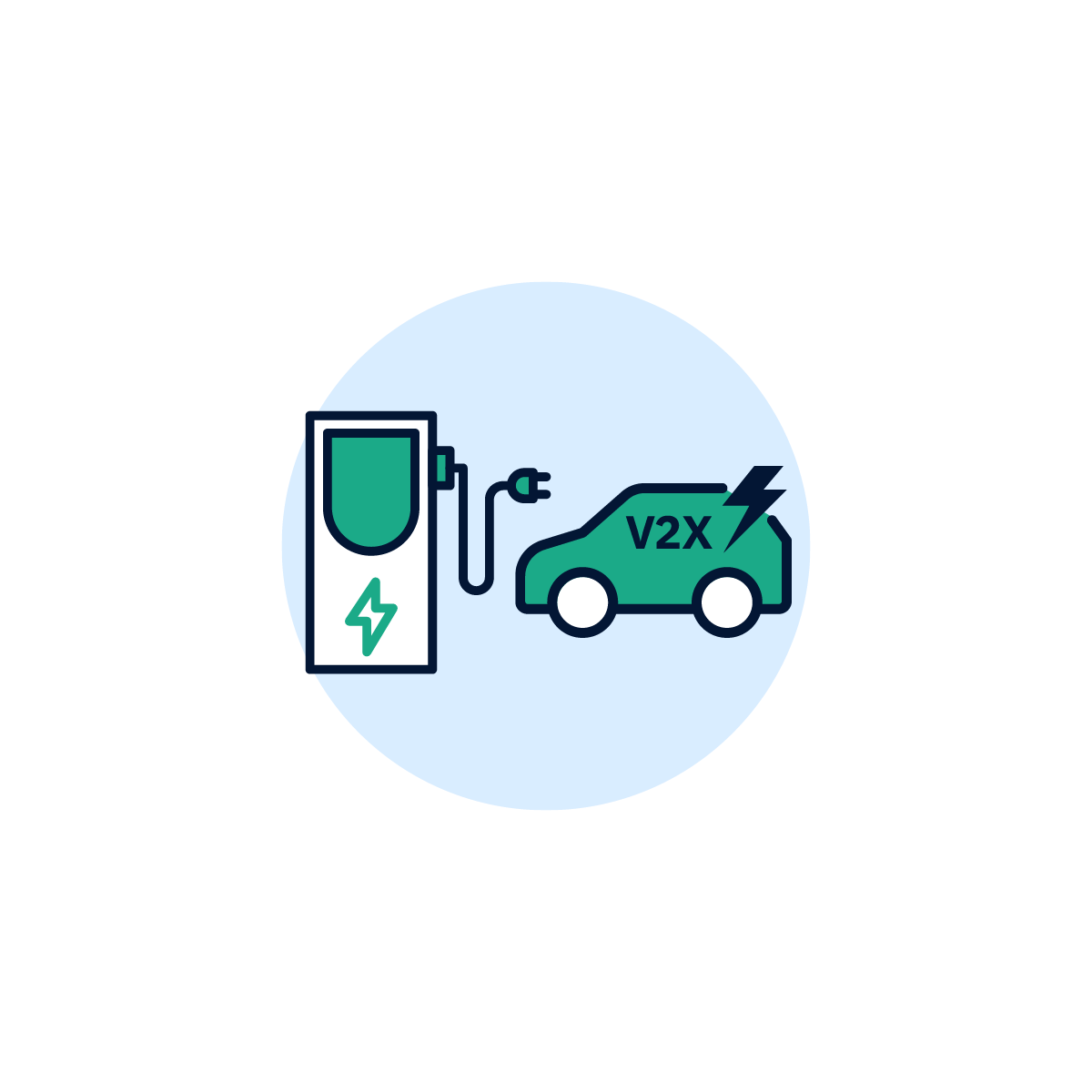
Most cars are idly parked 90-95% of the time. With an accelerated shift to using electric vehicles (EVs), the batteries of EVs offer enormous potential in terms of using their vast collective storage capacity as a flexible solution to support the grid, which can be taxed with an intermittent renewable energy supply. Bi-directional electric vehicle charging (V2X) refers to EV chargers that allow not only for charging the battery of the EV but also for taking energy from the car battery and pushing it back to the grid when needed. There are two primary receivers of power from an EV: the grid (V2G) and the electricity from a home or building (V2H). Bi-directional charging creates greater synergy between the clean transport sector and renewable energy sources, as the car batteries can store excess energy created by variable renewable sources, such as wind and solar, and then provide power to the grid or home when demand is high or energy production is low. This reduces curtailment, lowers the need for grid infrastructure investments and allows for higher renewable energy integration. In addition, V2H charging can act as an emergency power source during power outages, and V2G can provide vehicle owners with extra income through arbitrage of time-variable energy prices. Problems to be solved Grid congestion Growing energy consumption Fluctuating generation of renewables Uneven peaks in energy usage